

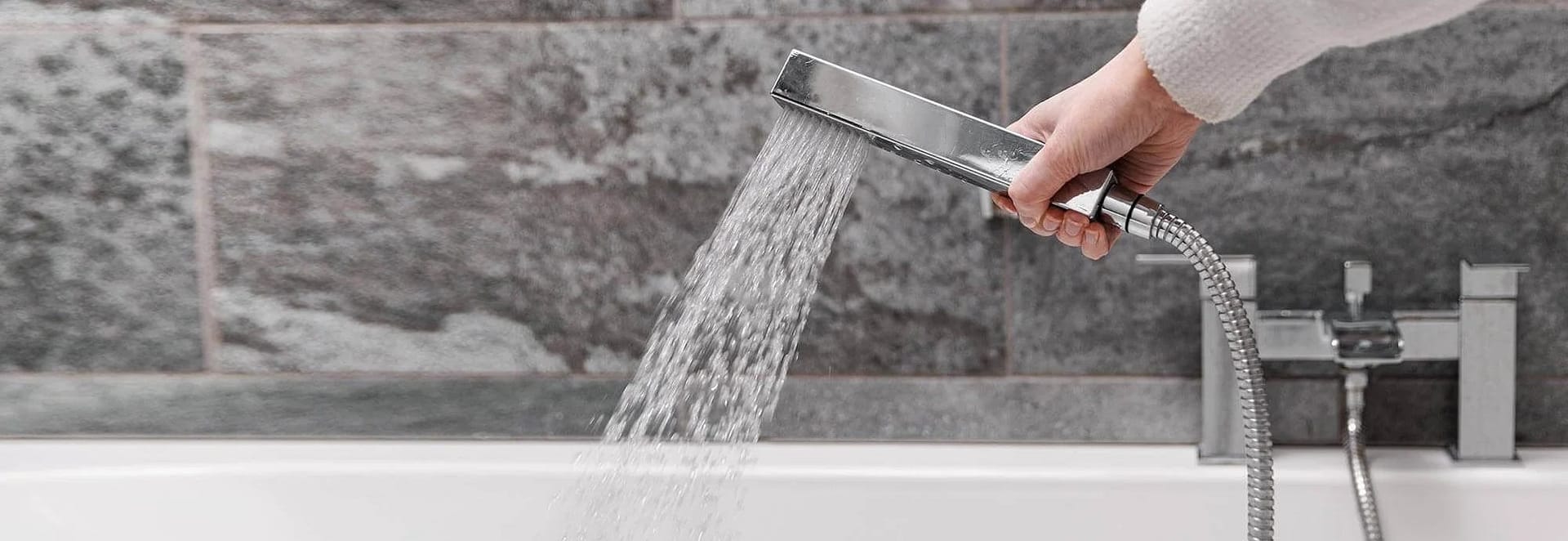
for low water pressure.
Which shower pump do I need?
Positive Head Shower Pump
A positive head shower pump is ideal when there’s a minimum head of 3ft 3ins (990mm) between the base of the cistern and the shower head.
This type operates effectively using gravity to initiate the flow of water. Essentially, it ‘pushes’ the water to the shower, making it suitable for setups with sufficient vertical distance.
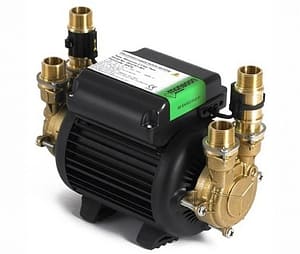
Negative Head Shower Pump
On the other hand, if the shower pump is located at the same level as or above the cold water tank, a negative head shower pump is the right choice.
This pump ‘sucks’ water from the tank to ensure efficient operation.
Single Impeller Shower Pump
The single impeller shower pump serves a single water supply—typically just the hot water. It is usually installed between the mixer valve and the shower head.
While older models commonly used this setup, they often faced issues in colder climates due to freezing in loft installations.
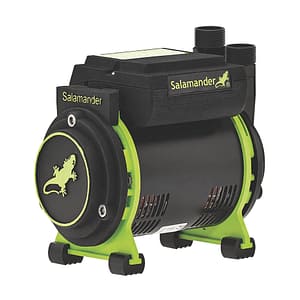
Twin Impeller Shower Pump
More prevalent today, the twin impeller shower pump offers versatility by supplying both hot and cold water to the shower mixer simultaneously.
Ideally, this pump should be positioned in the airing cupboard to minimize noise and should be located within 13ft (4 meters) of the hot water cylinder, sitting at least 1ft (300mm) below the cold water tank.
Deciding between a positive or negative head pump usually depends on the height difference between your cistern and shower rose.
Single or Twin Impeller?
If your water supply is well balanced, such as in areas with lower cold water pressures, a single impeller pump may suffice, utilizing the hot water supply to create a pleasant shower experience.
However, in urban settings where mains pressure water often runs between 4.0 and 5.0 bar, a twin impeller pump is necessary.
This will help balance the hot and cold supply, ensuring a consistent and comfortable shower temperature.
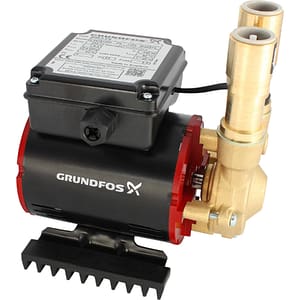
Centrifugal or Regenerative?
Finally, consider whether you need a centrifugal or regenerative pump. Centrifugal pumps, the more common choice, utilise centrifugal force to move water in and out, typically operating more quietly and efficiently.
Regenerative pumps, while generally more affordable and simpler to install, direct water flow in alignment with the impeller’s rotation, which may be advantageous if your pump is installed in a loft above the hot water cylinder.
However, be aware that regenerative pumps can be noisier compared to their centrifugal counterparts.
By assessing your water supply layout and specific needs, you can select the most suitable shower pump, ensuring an enjoyable and consistent shower experience.