

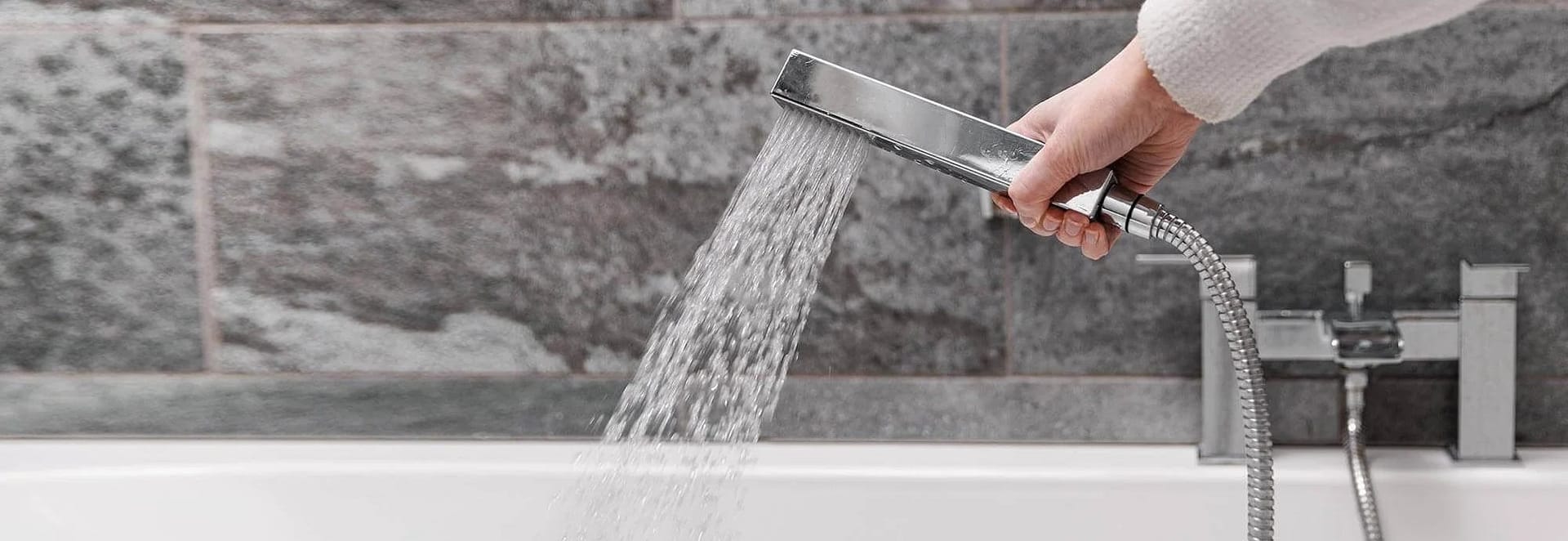
A Guide to Unvented Cylinder Installation
The Benefits of Installing an Unvented Cylinder
Many homes in the UK use a combination boiler, commonly known as a combi boiler. Households with higher hot water demands, such as those with multiple bathrooms or more radiators may benefit from an additional hot water cylinder.
This cylinder stores and heats a larger volume of water than a combi boiler can provide.
There are two main types of hot water cylinders: vented and unvented, each with its advantages for different household needs.
What is the difference between a vented cylinder and an unvented cylinder?
A vented hot water cylinder takes water from a large tank in the attic. This system is pressurised, providing hot water quickly when you turn on the tap.
There is no need for venting, but it requires space for the tank and relies on gravity for water pressure.
In contrast, unvented hot water cylinders have become more common since 1986. They get their water directly from the mains, which means you don’t need a tank in the attic, saving space.
Unvented cylinders also receive water from the cold mains, resulting in higher pressure and a more reliable flow of water.
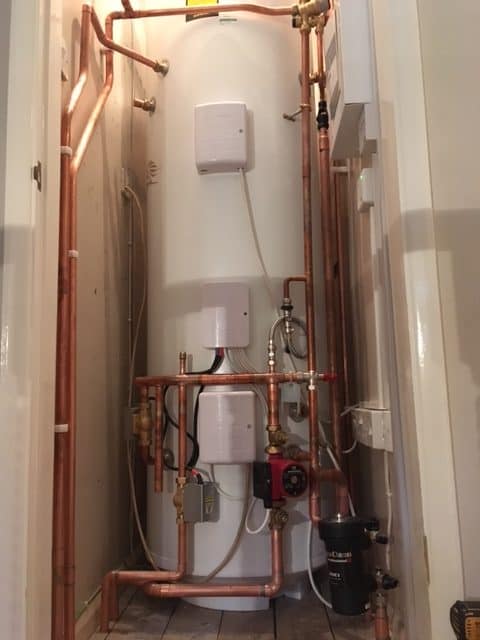
Is an Unvented Cylinder Right for You?
Many homeowners want to replace their regular boiler and vented cylinder because the water tank in the attic takes up a lot of space and often gives low water pressure.
Most homeowners, unless they have older properties with pipework that cannot handle higher water pressure, have a few options to consider.
If your home has fewer than 10 radiators and only one bathroom, you can remove your vented cylinder and water tank in the attic and install a combi boiler.
A combi boiler provides hot water and heating as needed. If your home has more than 10 radiators, two or more bathrooms, and a higher demand for hot water, a system boiler with an unvented cylinder is a better choice.
Advantages of installing an unvented cylinder
- An unvented cylinder draws water directly from the mains, allowing you to eliminate
the attic water tank and create more space in your home. - Mains water typically offers a stronger and more dependable flow.
- By removing the attic tank, you lessen the chance of the cold water tank and pipes
freezing during colder months. - You will have access to a large volume of hot water, capable of servicing multiple
taps and showers simultaneously. - Unvented cylinders can often work in conjunction with solar thermal panels, enabling
you to heat water at no cost using sunlight, which can help decrease your heating
expenses and carbon footprint. - An unvented cylinder can be positioned anywhere in the home, while a vented
cylinder must be installed beneath the cold water tank in the attic. - Unvented cylinders tend to operate more quietly as they do not have the gurgling
sounds associated with the slow refilling of a water tank. - These cylinders are part of a sealed system, eliminating the risk of contamination
from the cold water tank.
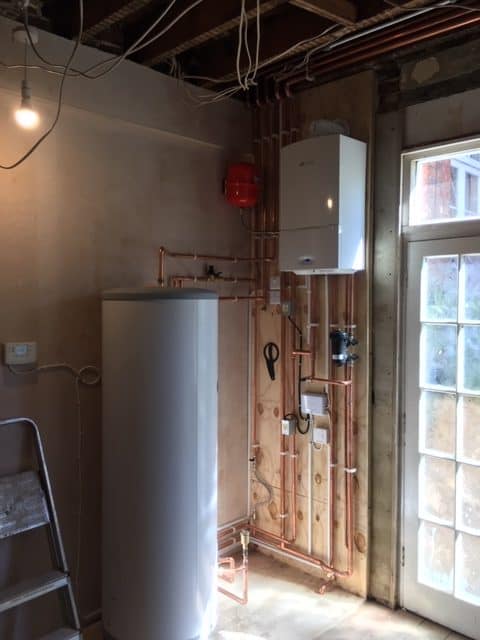
Disadvantages of unvented cylinder installation
- Since an unvented cylinder is connected to the mains supply, a power cut will leave you without hot water.
- The installation of unvented cylinder systems is more expensive than vented systems because they function under high pressure and need additional safety features.
- Unvented cylinders need to be fitted by a qualified installer holding G3 certification and require regular maintenance.
How do unvented cylinders work?
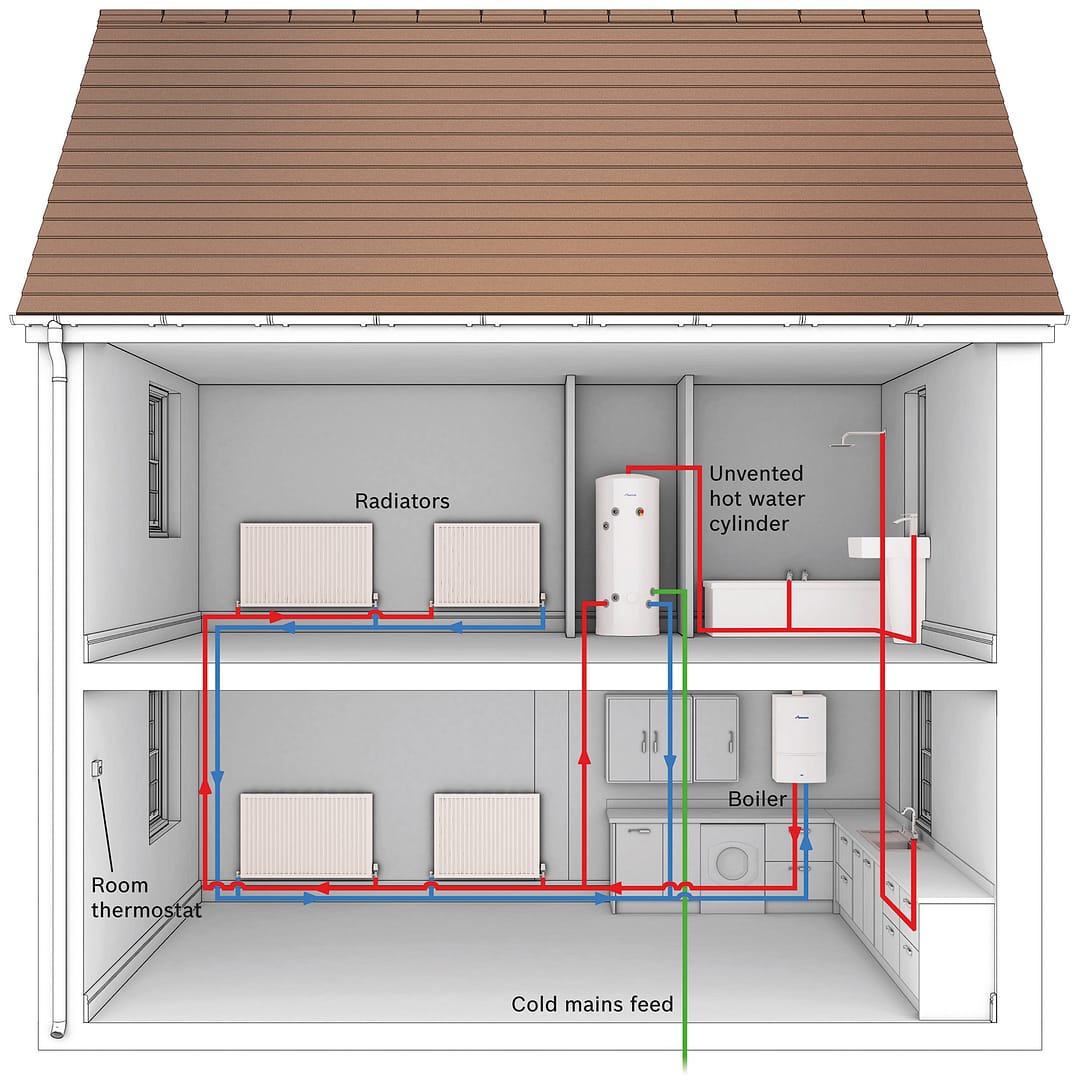
An unvented cylinder operates by connecting directly to the mains cold water supply, which allows for water storage under constant pressure. These cylinders can be categorised as either directly heated or indirectly heated.
In the direct heating method, an electric immersion heater is installed inside the cylinder. In contrast, the indirect heating method relies on an external heat source, such as a boiler, heat pump, or solar thermal panels.
Often, unvented cylinders primarily use an external heat source but also include an immersion heater as a backup option.
When you turn on a hot water tap or activate an appliance, hot water is delivered through an outlet pipe to the desired location.
As hot water is drawn from the cylinder, it is simultaneously replaced by cold water from the mains supply, maintaining consistent pressure throughout the system, regardless of the number of hot water outlets in use.
To ensure safety, unvented cylinders are equipped with various safety systems designed to vent excess pressure or lower the temperature if it reaches dangerously high levels.
Typically constructed from stainless steel or heavy gauge copper, these cylinders can also feature additional lagging insulation to minimise heat loss.
Do you need a qualified engineer to install an unvented cylinder?
When installing a vessel that holds more than 15 litres of hot water under pressure, it’s essential to adhere to the G3 Building Regulations set by the government.
For unvented cylinders, only qualified installers who have completed CITB training and possess G3 certification should undertake the installation. Due to the high pressure and large volume of hot water involved, improper installation can lead to serious safety hazards.
Do unvented cylinders need an annual service?
Unvented cylinders require annual servicing by a qualified engineer to ensure safety and maintain optimal performance. Given that these cylinders function under high pressure and temperature, regular maintenance is essential to prevent potential issues and ensure efficient operation.
Annual servicing ensures the unvented cylinder remains under warranty with the manufacturer.